
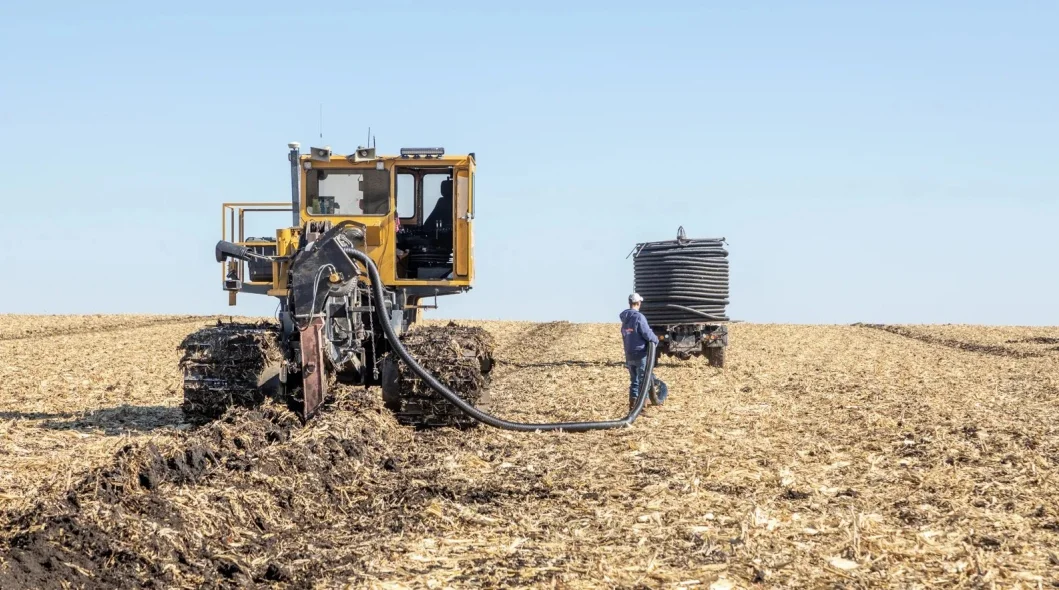
For landowners looking to improve farm productivity, the very first step should be evaluating the drainage situation. If your farm has any areas with slow drainage, adding tile can turn previously unproductive areas into profitable land. No other improvement or technique can be as impactful.
Problems with Saturated Soil
Saturated soil causes serious problems for growing crops and long-term soil health. Here’s why:
1. Lack of Oxygen
Saturated soils fill pore spaces with water, leaving no room for air. Crop roots need oxygen to grow, so if saturation reaches the surface, crops will die. Or more commonly, when saturation is within a few feet of the surface, roots stop growing down at that point, limiting nutrient uptake and reducing stability.
2. Delayed Fieldwork
Wet spots slow down or prevent operations like planting, spraying, and harvest, leading to delays and likely yield loss.
3. Soil Structure Damage
Extended periods of saturation in soil destroys the soil aggregates, leading to compaction, nutrient loss, and reduced infiltration even after drying. Without oxygen, beneficial microbes also die, further degrading soil health.
4. High pH issues
Prolonged saturation can increase soil pH over time. High pH interferes with nutrient availability. Tile drainage can slowly help lower pH by flushing out excess magnesium or calcium.
5. Cold Spring Soils
Water stays cold longer than air, so wet soils warm slowly in spring, delaying planting and early seedling growth.
6. Increased Disease Pressure
Saturated soils stress crops and weaken roots, leaving them more vulnerable to diseases and pests.
How Tile Drainage Works
All these issues ultimately lead to lost yield and lower profits. Drainage tile helps solve these problems by lowering the saturated zone to make room for deep, healthy roots.
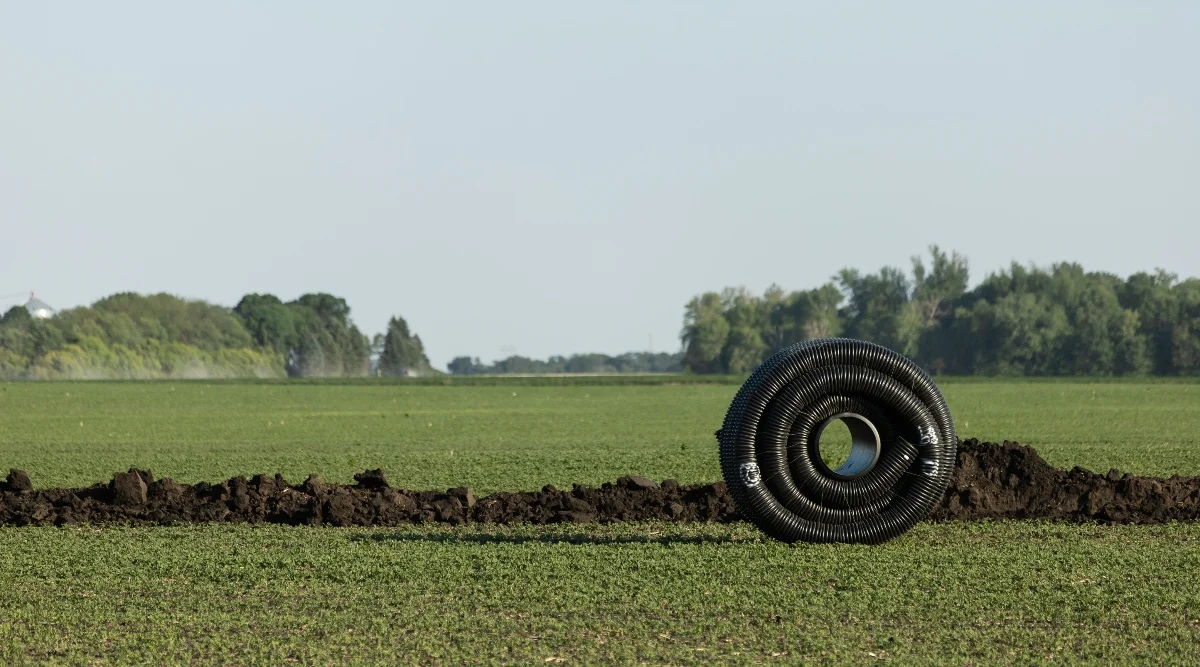
The concept is simple: perforated plastic pipe is buried 3-5 feet underground with a gentle slope to keep water moving downhill toward an outlet, which is usually a larger main tile, drainage ditch, or creek.
Many existing main tile systems are decades old, some over 100 years, and still working! The problem is most of the old systems are overloaded because of new tile added to the old mains over the years.
Direct Outlet (Ditch or Creek)
If your property has a direct outlet (like a ditch or creek), you have an advantage. You can install laterals and drain your fields directly to the outlet without connecting to a main line that’s likely overloaded. If a new main tile is needed, the job will become much more complicated and expensive, often involving multiple landowners.
In the past, farmers were more likely to install a single tile line through the wettest part of a field. Today, the trend has shifted toward pattern tiling, which is installing smaller lines at closer spacings (down to 30 feet or less) to provide uniform drainage.
Although a much more expensive system upfront, it offers the most consistent yield benefits across more acres. This is especially true on relatively flat farms with heavy soil types, which are common in our region.
Economic Payback
The payback from tile depends on a lot of different factors. As farm managers, we evaluate the outcomes of many tile projects using drones, satellite imagery, and ultimately yield maps from combines. We typically see 15% to 25% yield gains on corn and soybeans.
Tax Deductibility of New Tile Installation
The tax treatment of new tile installation depends on how your land is leased. However, in most cases, there is currently a way to make your new tile 100% tax deductible in the first year.
- Active farmers, custom farmers, or sharecroppers: The full cost of the tile is generally deductible in the first year using IRS Section 179.
- Cash-rent landowners: The tile is typically considered a capital improvement and treated as a depreciable asset. Under today’s rules you should be able to claim 100% bonus depreciation in the first year.
As always, it’s best to confirm your specific situation with your CPA or tax advisor.
Get Started With Stalcup
If you’re considering tile installation, here are your first steps:
1. Review historical yield maps and satellite imagery to help identify the consistently wet areas. They show up from thin crop canopy, yellowing crops, or darker soils after harvest. The farm operator will also know where the issues are.
2. Check for wetland determinations with your local NRCS or Farm Service Agency office before beginning work.
3. Meet with an experienced tile contractor to survey the field using GPS and develop a design to fit your farm’s conditions.
At Stalcup Ag Service, farm managers work with many different tile contractors on behalf of our landowner clients. We help with setting a budget, identifying the problem areas, analyzing yield data, creating elevation maps from Lidar data, assisting the contractors with the design, obtaining competitive bids, and checking the work on site as it happens.
Our team is ready to connect. Call us or contact us online—we look forward to the conversation.