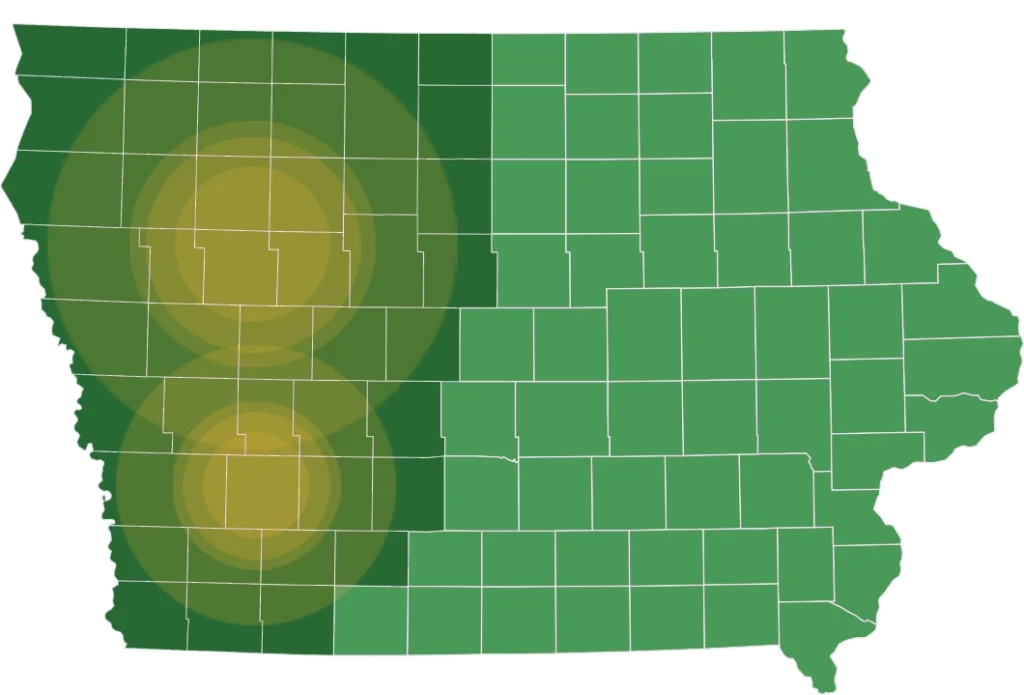


Crops in this area are racing toward maturity, pushed by very hot temperatures over the past couple of weeks. Conditions were also quite dry during that time with many areas seeing no rain for two weeks or more. I believe if it wasn’t for the major rains and moderate temperatures we had in early-August; this area would have had major crop losses like 2012. However, many farms were fortunately in good shape going into that late-August period, so they handled the stress much better taking less of a hit. We are finally getting a break from the heat this week. The cooler weather will slow crop progress down a little, but the forecast remains mostly dry.
Most corn fields are a week or so away from full maturity (black layer), but some are already fully mature now. The corn is starting to turn yellowish brown, especially on the lower leaves. This is a normal part of maturing, but on many farms, it’s occurring faster than we’d like because of heat stress, light soil, leaf or stock disease, nutrient deficiency, insect feeding, or wind/hail damage. The combination of warm and dry weather to finish out the season has reduced corn yields by some degree. However, I’m still finding very good yield estimates in some areas. The wide variability of rainfall amounts this season was the biggest factor in yield differences, but quality soil and fertility are also showing up. I think there will be extreme yield variability at harvest this year from very poor to possible record highs. Corn silage harvest is near completion, and some farms will be combined for grain very soon. The bulk of the corn crop will be ready to harvest in late September or by early October, but the beans should be ready at the same time. Beans will take priority, so some of this corn may be quite dry by the time it’s harvested. It will be important to watch for stalk quality issues, so the corn doesn’t end up on the ground.
Soybeans are on schedule for a slightly early harvest timeline in late September. Many fields are just starting to turn yellow this week. Rain would still help the bean fields that remain mostly green. Like corn, farms with the best water holding capacity, fertility, and relatively more rain look to have a good crop. Overall, I anticipate an average bean crop, but yields will be variable.
We use cookies to improve your experience on our site. By using our site, you consent to cookies.
Manage your cookie preferences below:
Essential cookies enable basic functions and are necessary for the proper function of the website.
CloudFlare provides web performance and security solutions, enhancing site speed and protecting against threats.
Service URL: developers.cloudflare.com (opens in a new window)
These cookies are needed for adding comments on this website.
Google Tag Manager simplifies the management of marketing tags on your website without code changes.
Service URL: business.safety.google (opens in a new window)
Statistics cookies collect information anonymously. This information helps us understand how visitors use our website.
Clarity is a web analytics service that tracks and reports website traffic.
Service URL: clarity.microsoft.com (opens in a new window)
Google Analytics is a powerful tool that tracks and analyzes website traffic for informed marketing decisions.
Service URL: business.safety.google (opens in a new window)
Google reCAPTCHA helps protect websites from spam and abuse by verifying user interactions through challenges.
Stay informed and connected—subscribe to our mailing list today to receive the latest issues of Today’s Land Owner, Crop Updates, or get notified of auctions and real estate for sale, sent directly in your inbox!