

This will be my final crop progress report of the season. Harvest is nearly complete, although a few corn fields remain to be harvested around the area. Wet weather this fall delayed harvest, making this the latest harvest we’ve experienced since 2019, according to my records. On the bright side, this fall has also been one of the warmest in recent memory, making the delayed harvest a little more comfortable for farmers despite the mud.
The U.S. Drought Monitor shows no remaining drought across Iowa, eastern South Dakota, or eastern Nebraska. You would have to go back to November 2019 to find similar conditions in these same areas. That is generally a positive sign heading into next year’s growing season, although that depends how wet next spring turns out to be. Having some room in the soil profile to absorb spring rainfall could needed if we experience a wet planting season.
Fall fieldwork, including fertilizer, anhydrous ammonia (NH3), and manure applications, has been challenging due to wet conditions. There is still quite a bit of work left to complete, and rain is in the forecast for tomorrow. If rainfall amounts are minimal and the ground doesn’t freeze solid for another couple more weeks, I think we should have another opportunity to get back into the fields and finish these applications.
Harvest traffic and fall field applications caused soil compaction in those traffic areas. Tillage may be needed in breakup compaction, although results may be limited. Natural freeze-thaw cycles over the winter should also help loosen the soil. Looking ahead, two-week forecasts continue to favor above-average temperatures with average to below-average precipitation. That is an encouraging outlook for getting more fall fieldwork completed.
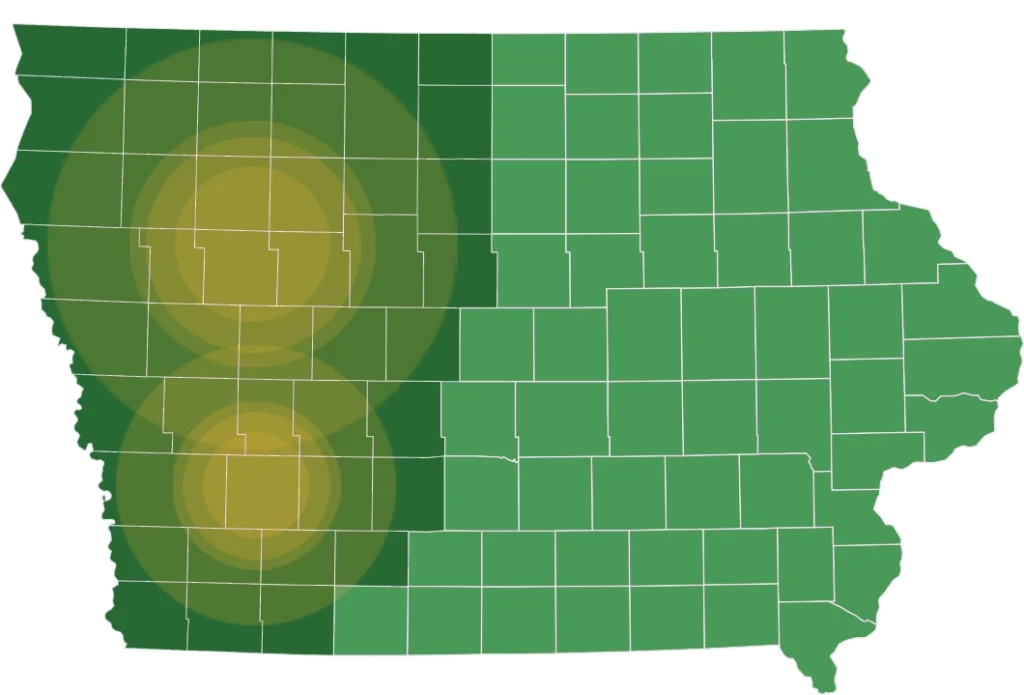
Corn yields were generally above average on farms with higher-quality soils, although there was considerable variability across the region. The southern portion of the area was particularly variable. Farms that missed much of the early July rainfall had erratic yields, while other farms produced their best corn crop ever. Farms with top-quality soils and strong fertility excelled compared to more marginal soils. Overall, most of our region has now experienced four consecutive good corn crops in a row.
Soybean yields were also good to very good on most farms. I noticed that soybean yields were somewhat more consistent than corn yields this year. I believe that’s because August and September rainfall was more consistent across the area than rainfall in July. Significant late-season rainfall helped improve soybean yields, particularly for mid- to late-maturity varieties. There was still a range of outcomes, but most farmers seemed satisfied with their soybean yields.
As we wrap up another year, I want to wish everyone a Happy Holiday Season!
Use the button on the right to view the past Crop Conditions reports.
We use cookies to improve your experience on our site. By using our site, you consent to cookies.
Manage your cookie preferences below:
Essential cookies enable basic functions and are necessary for the proper function of the website.
CloudFlare provides web performance and security solutions, enhancing site speed and protecting against threats.
Service URL: developers.cloudflare.com (opens in a new window)
These cookies are needed for adding comments on this website.
Google Tag Manager simplifies the management of marketing tags on your website without code changes.
Service URL: business.safety.google (opens in a new window)
Statistics cookies collect information anonymously. This information helps us understand how visitors use our website.
Clarity is a web analytics service that tracks and reports website traffic.
Service URL: clarity.microsoft.com (opens in a new window)
Google Analytics is a powerful tool that tracks and analyzes website traffic for informed marketing decisions.
Service URL: business.safety.google (opens in a new window)
Google reCAPTCHA helps protect websites from spam and abuse by verifying user interactions through challenges.
Stay informed and connected—subscribe to our mailing list today to receive the latest issues of Today’s Land Owner, Crop Updates, or get notified of auctions and real estate for sale, sent directly in your inbox!