
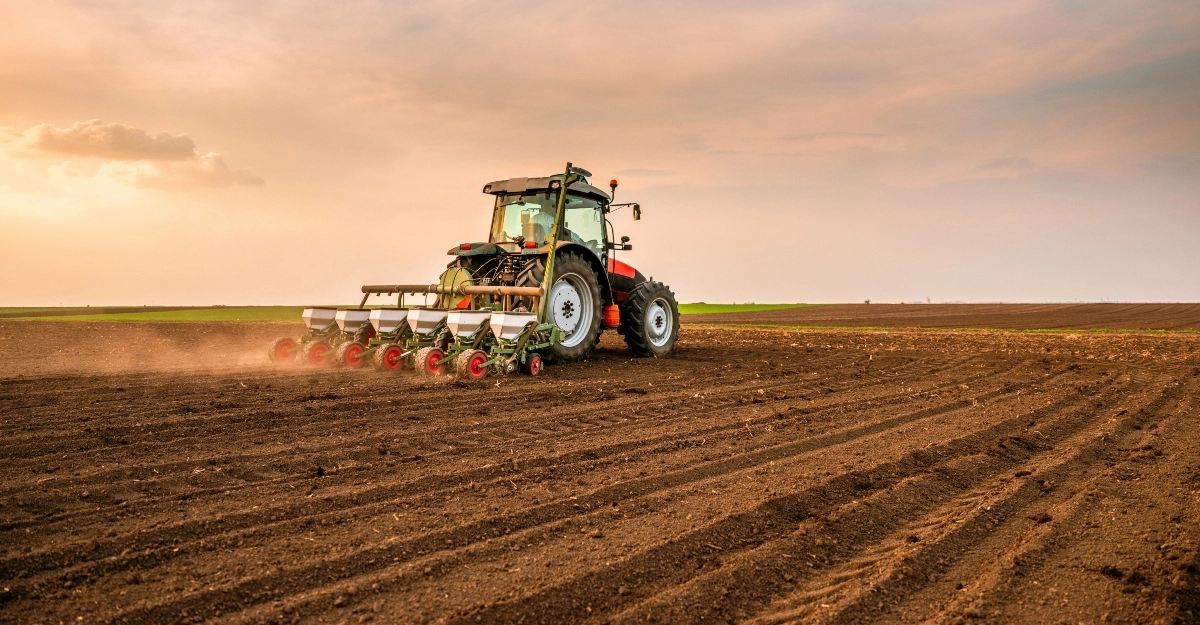
Planting & Emergence: A Bumpy Start to a Promising Season
Planting kicked off ahead of schedule in mid-April, and for most farms the season got off to a smooth start. By mid-May, the majority of acres in the area were in the ground, but weather and soil conditions made life difficult for crops trying to emerge and establish.
A warm stretch in April got planters rolling, only for temperatures to dip into a cold snap from late April into early May, then swing back to very warm later in the month. The region is running ahead of normal on heat units for the season overall, which is great for crop development. But that early cold spell, followed by the back-and-forth swings, hit emerging crops right when they were vulnerable.
Erratic rainfall was another challenge. Some areas missed most of the spring rains altogether after planting, leaving seed sitting in dry soil. Others had heavy, pounding rain that left a hard crust on the soil surface.
Both situations made it tougher for seedlings to push through, so emergence issues were more common this year than usual.
Crop Conditions Heading Into Midsummer
Despite the bumps along the way, overall crop conditions in our region remain encouraging. The warm, generally dry spring was favorable for getting crops planted and established early, and even with the emergence challenges, nearly every farm ended up with workable plant populations.
Yield potential looks generally good across the board heading into midsummer. However, the deeper soil moisture reserves are low, so if a “flash drought” develops, crop
conditions could change in a hurry.
Zooming out to the national picture, the Midwest growing season has been solid so far, though never perfect. It seems like at least 10% of the Corn Belt runs too dry and another 10% too wet in any given year (even a good year), and this year is no exception: the Eastern Corn Belt and Northern Plains have leaned too wet, while the western Corn Belt continues to run dry.
USDA’s June 14 Crop Progress Report rated the U.S. corn crop at 68% good-to-excellent and soybeans at 66% good-to-excellent. Those ratings aren’t quite as strong as this time last year, but they’re still above historical averages.
The long-range outlook is being shaped by a strong El Niño pattern, which typically lowers the odds of widespread Midwest drought.
The Markets: A Spring Rally That Didn’t Last
As long as our summer weather is viewed by the market as “nonthreatening” to crops, we could be looking at lower prices again this fall.
Corn and soybean prices trended upward through April and into May, then reversed hard in June (faster than we expected). Corn fell back to last October’s lows. Our local cash corn price reached about $4.50/bushel at area ethanol plants and feed mills in early May, only to slide well below $4.00 by June.
Soybeans held up better than corn through the spring. Local cash bean prices touched roughly $12/bushel in May before the market cooled off significantly, dropping below $11 in June.
The silver lining: that’s still nearly a dollar a bushel higher than where beans were trading last summer.
What’s driving the pullback:
- Favorable weather, big supply. Good U.S. crop weather combined with stronger South American production forecasts has weighed on prices.
- China hasn’t shown up — yet. Despite May’s announcement that China would purchase $17 billion in U.S. ag products annually on top of 25 million tons of soybeans already committed, the market has been disappointed by the lack of sizable new Chinese purchases.
- Oil prices dropped. A tentative U.S.–Iran peace agreement triggered a sharp drop in crude oil, and grain prices have been tracking oil closely.
What to Watch This Summer
Weather through corn pollination in July and soybean pod-fill in August is the real wildcard. The season has been mostly favorable so far, but there’s still plenty of time for a weather market to develop.
Any hot, dry stretch during those critical windows could reverse the price trend quickly and bring a weather risk premium back into the market.
Bottom line: conditions look good right now, but “right now” can change fast in July and August. Stay tuned to our Crop Conditions reports and contact us if you want to talk.