
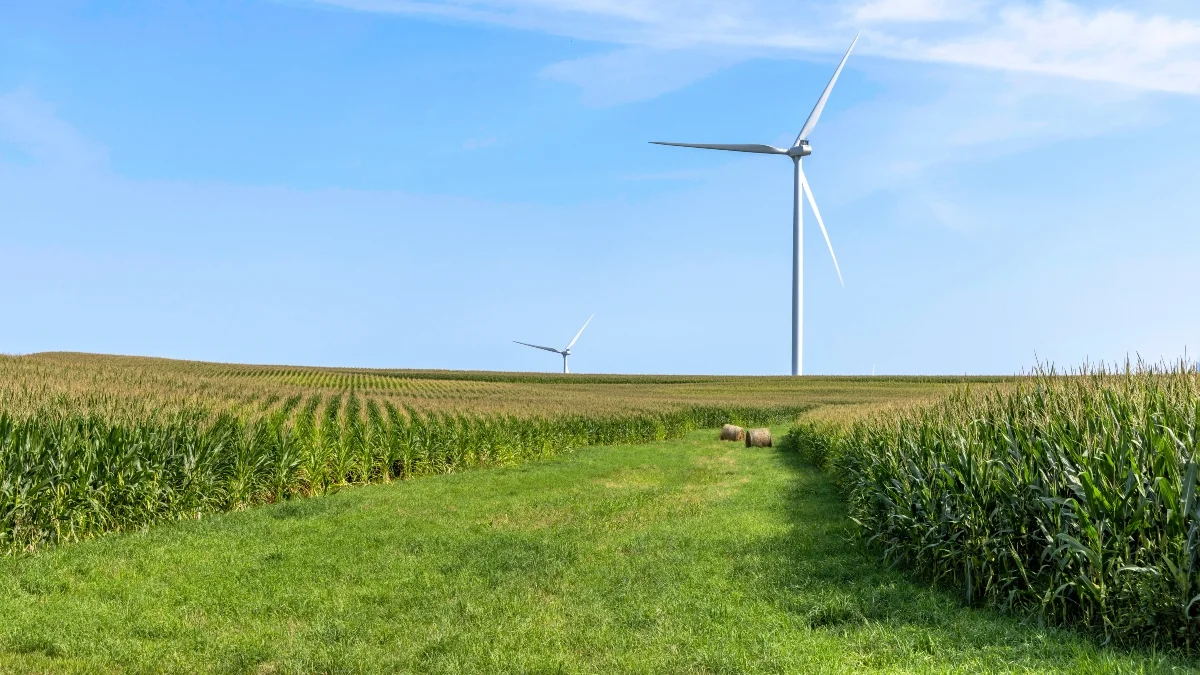
Across the Midwest, farmland owners, especially absentee owners, are receiving calls, emails, and letters from renewable energy developers offering long-term leases for wind turbines or solar arrays. These offers often promise guaranteed income far above traditional farmland rent.
At first glance, it can sound like a win-win: reliable income, low involvement, and participation in the growing renewable energy market. But beneath the surface, these agreements carry complexities that can affect land value, soil quality, and future use.
As with any major land decision, careful evaluation is essential. Understanding how renewable leases differ from traditional crop leases helps landowners make choices that protect both short-term returns and long-term potential.
The Growing Interest in Renewable Energy Leases
According to the U.S. Department of Energy, utility-scale solar and wind capacity is expanding rapidly across Iowa, South Dakota, and Minnesota. Much of that development is happening on farmland because it offers large, open spaces near existing transmission lines.
Developers typically offer long-term leases—often 25 to 50 years—with annual payments that can range from several hundred to several thousand dollars per acre, depending on the project and location. These leases can look appealing compared to average cash rents.
But renewable energy leasing introduces a fundamentally different relationship with your land than traditional crop leasing.
Understanding the Differences
1. Lease Duration and Flexibility
- Crop leases are typically renewed annually, giving landowners flexibility to adjust rent, change tenants, or revise management goals.
- Renewable energy leases often last 25 years or more, with renewal options that can extend that period even longer.
Once the lease is signed and infrastructure is built, the land may be committed for decades, limiting future use for farming or resale flexibility.
Key takeaway
Renewable leases are long-term legal commitments that can outlast ownership changes. Always involve legal counsel before signing.
2. Income Stability vs. Opportunity Cost
Renewable leases can provide steady, predictable payments, offering a hedge against market volatility or crop failure.
However, the opportunity cost is high. Land used for turbines or solar panels is usually removed from production, reducing agricultural output and potentially affecting property value for future buyers interested in farming.
Some owners find a balance by leasing only a portion of their acreage, preserving flexibility for continued crop production.
3. Soil and Drainage Impacts
While renewable projects often promise to minimize disturbance, installation can affect topsoil integrity, drainage systems, and field access.
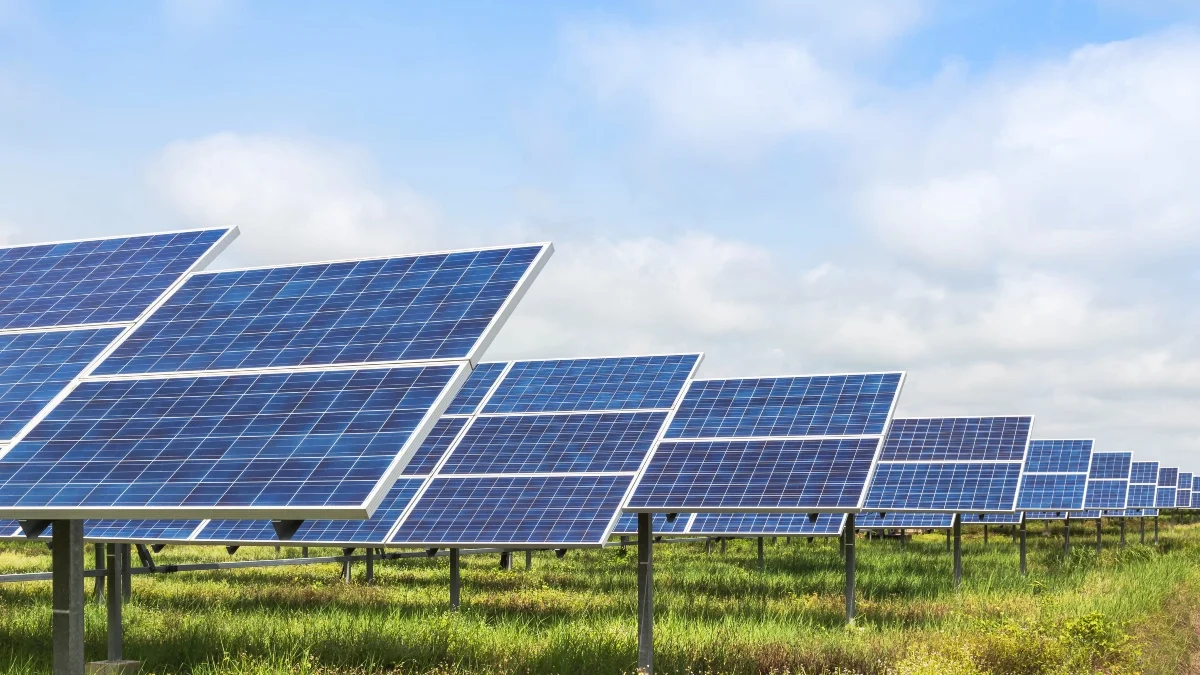
- Solar projects require grading and trenching for wiring, which may compact soil and disrupt tile lines.
- Wind turbine construction can damage field entrances and access routes due to heavy equipment.
These impacts may not always be apparent until after construction. It’s critical that lease agreements require clear restoration standards and soil remediation clauses.
4. Legal and Tax Considerations
Renewable leases differ from agricultural leases in several important legal ways:
- Easements and access rights: Developers often seek broad access to your property, sometimes including restrictions that affect neighboring land use.
- Property taxes: Energy infrastructure can shift how land is assessed. Depending on local law, the landowner—not the developer—could face increased tax liability.
- Termination clauses: Exiting a renewable lease early can be difficult or impossible without substantial penalties.
Before signing, landowners should review contracts with an agricultural attorney who understands renewable energy agreements, not just standard farm leases.
5. Future Agricultural Use and Land Value
Once renewable infrastructure is in place, returning the land to productive agriculture can be challenging. Soil compaction, altered drainage, and vegetation changes can all impact yield potential.
Additionally, future buyers may be hesitant to purchase land encumbered by long-term leases, even if payments are lucrative. Some appraisers may discount the value of encumbered land, depending on lease terms and duration.
Key takeaway
Renewable energy income may boost cash flow, but it can also complicate resale value and long-term agricultural productivity.
A Balanced Approach: Diversifying Income, Protecting the Land
For many farmland owners, the best strategy lies in balance, embracing renewable opportunities without jeopardizing the land’s core purpose.
Some landowners dedicate small or less-productive areas of their property to renewable projects while maintaining active crop leases on higher-quality acres.
Others negotiate shorter initial lease periods or performance reviews to maintain flexibility.
Another approach is to pair renewable energy leases with conservation goals.
For example, pollinator-friendly solar arrays with native vegetation can enhance biodiversity and soil stability.
Before committing, consider:
- How much land can be spared without harming overall productivity?
- What will the land’s condition be after the lease ends?
- How will the lease affect estate planning or future ownership transitions?
How a Farm Manager Can Help
For absentee landowners, navigating these complex contracts from afar can be daunting. That’s where a professional farm management partner like Stalcup Ag Service provides value.
Stalcup’s farm managers help evaluate lease proposals, compare renewable payments against agricultural potential, and coordinate with legal and appraisal experts. Their goal is to help landowners make informed, data-driven decisions that balance profitability, stewardship, and flexibility.
By maintaining strong tenant relationships and a deep understanding of local markets, Stalcup Ag Service ensures landowners remain confident stewards, whether their land grows crops, supports turbines, or hosts solar panels.
Protecting Your Legacy While Exploring New Opportunities
The promise of renewable energy leasing is real—but so are the risks. For absentee owners especially, the key lies in due diligence: understanding the financial, legal, and environmental trade-offs before signing a decades-long commitment.
With expert guidance, transparent comparisons, and an eye on the land’s long-term value, owners can find a path that keeps their farmland productive, profitable, and sustainable for generations to come.
To learn more about evaluating lease opportunities and protecting your farmland investment, contact Stalcup Ag Service at 712-732-4811 or complete our online contact form.